CHAUHAN LAB
  • Home
  • PROFILE
  • Research
  • Publications
  • In News
  • Cover Pages in Journals
  • Members
  • Lab Gallery
  • Contact
  • Programmed Cell Revival
Picture

Awards and Honors:

1. TNQ Inspiring Science Mentor Award- 2026

2. SUNPHARMA Research Award-2023

3. NASI-SCOPUS Young Scientist Award-2022

4. 
Elected Fellow of Indian National Science Academy (INSA)-2024

5. Elected Fellow of Indian Academy of Sciences (IASc)-2023

6. Elected Fellow of National Academy of Sciences (NASI)-2020

7. S Ramachandran-National Bioscience Award for Career Development- DBT, India-2019

8. EMBO Global Investigator Fellowship-EMBO, Germany- 2019-2023

9.  Merck young Scientist Award-2019

10. Selected for Wellcome-DBT intermediate fellowship-2015

11. Selected for Ramanujan Fellowship-2015

12. Selected for Ramalingaswami Fellowship-2015

13. Associate Faculty Member for F1000Prime, 2014-present

14. Associate of Indian Academy of Sciences, 09-2013.

15. Junior  Research Fellowship, CSIR, India 2004-2009.

16. Qualified Graduate Aptitude Test in Engineering-2003, India.

17. Qualified national level combined biotechnology test, 2001 for M.Sc (Biotechnology).


Picture
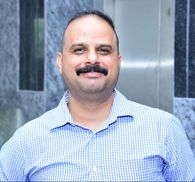
Santosh Chauhan, Ph.D.
Senior Principal Scientist | CSIR- CCMB
​
 Elected Fellow: INSA (2024), IASc (2023), NASI (2020)

Raised in an Army family and educated at Kendriya Vidyalayas across India, from Hyderabad and Ambala to Rewari and Udaipur, I developed a disciplined, pan-India perspective that defines my scientific approach.
I earned my Bachelor’s degree at Rajrishi College, Alwar, and my Master’s from Guru Nanak Dev University (GNDU), Amritsar, where I graduated as one of the topper. I obtained my Ph.D. from the All In
dia Institute of Medical Sciences (AIIMS), New Delhi, under the mentorship of Dr. J.S. Tyagi. My doctoral research provided fundamental insights into the transcriptional regulation of Mycobacterium tuberculosis, specifically the DevR (DosR) regulon, establishing my foundation in host-pathogen dynamics.

In 2009, I moved to the United States for postdoctoral training at the MD Anderson Cancer Center (MDACC), Houston. In the Department of Cancer Biology, I specialized in the role of autophagy in oncogenesis and gene regulation. I further expanded my expertise in cellular homeostasis and innate immunity during a second postdoctoral fellowship at the University of New Mexico under Dr. Vojo Deretic. 

After serving as a faculty member at the Institute of Life Sciences (ILS), Bhubaneswar, starting in 2015, I joined CSIR-CCMB, Hyderabad, in September 2022. My lab currently sits at the intersection of basic discovery and translational medicine, focusing on  core pillars:

The Discovery of Programmed Cell Revival: My team recently pioneered the study of "Programmed Cell Revival," published in The EMBO Journal (2025), with a patent filed for technology. This work challenges the long-standing dogma of irreversible cell death by demonstrating a programmed molecular "U-turn" that allows cells to recover from the brink of death to promote tissue regeneration and repair.

IRGM & Innate Immunity: We explore how the autoimmunity gene IRGM regulates host-pathogen interactions and interferon responses. Our work has shown that IRGM is a critical negative regulator of the cGAS-STING and NLRP3 inflammasome pathways, maintaining immune homeostasis. (Molecular Cell, 2019; EMBO Reports, 2020; EMBO Reports, 2021; EMBO, 2022)
​

Autoimmune Disease and Inflammation: We discovered a novel signaling platform (the RIPosome) that initiates immune responses against bacteria. Our work identifies the precise molecular "off-switches" that prevent these responses from causing chronic inflammatory diseases and autoimmunity. (EMBO, 2022)

Cancer biology program: We have uncovered a novel survival paradigm that explains how malignant cells bypass natural constraints to accelerate proliferation. We have mapped these mechanisms across two critical cellular dimensions: the stabilisation of the cell cycle to drive unchecked division (Cancer Research, 2021) and the maintenance of proteostasis to detoxify the cell under extreme metabolic stress (EMBO. 2018). By demonstrating that disrupting these pathways leads to significant tumor regression in in vivo models, we have established these regulatory nodes as high-value targets for the development of "first-in-class" cancer therapeutics.


​Translational Approach: My research aims to bridge high-impact basic science with clinical application. By leveraging our discoveries in IRGM inhibition and Programmed Cell Revival, we are developing "first-in-class" small-molecule therapeutics. These efforts are focused on artificially boosting host immunity to combat viral infections and cancer, while harnessing revival programs to revolutionize regenerative medicine.


SCIENCE IS NOT ONLY A DISCIPLE OF REASON BUT, ALSO, ONE OF ROMANCE AND PASSION-STEPHEN HAWKING

Imagination is more important than knowledge. - Albert Einstein

“All Birds find shelter during a rain. But Eagle avoids rain by flying above the Clouds.” Problems are all common, attitude makes the difference.- A.P.J Abdul Kalam
  • Home
  • PROFILE
  • Research
  • Publications
  • In News
  • Cover Pages in Journals
  • Members
  • Lab Gallery
  • Contact
  • Programmed Cell Revival